Energy use is becoming a practical production issue in rubber and elastomer processing. Hydraulic systems must provide pressure and flow during clamping, injection, holding, and other cycle stages. When output does not match real demand, electricity can be consumed without adding useful work. This is why a servo hydraulic injection molding machine is receiving more attention in high-load production.
Equipment buyers also need to look beyond installed motor power. Cycle structure, response speed, pressure stability, and idle energy use all affect operating costs. For a hydraulic press machine for rubber molding, energy efficiency therefore depends on how the hydraulic system responds during different stages, not only on rated power.
Why Hydraulic Energy Use Deserves Closer Attention
Traditional hydraulic control can keep pumps working at output levels that are higher than the process requires. During lower-demand stages, part of that energy may be lost. Over repeated cycles, the difference can become significant for plants operating several shifts.
Rubber molding also involves changing loads. Clamping may require high pressure, while other stages may need less flow or a different response profile. One fixed operating pattern cannot match every stage equally well. Energy management therefore starts with matching hydraulic output to real process demand.
Production managers should also consider how energy use interacts with cycle time. Reducing pump output too aggressively may slow response. The practical target is controlled power use while retaining the pressure, speed, and repeatability required by the molding process.
Demand-Based Control Changes the Energy Profile
Servo-hydraulic systems can adjust motor and pump output according to requested pressure and flow. Instead of maintaining unnecessary output throughout the cycle, the system responds to actual operating commands. This approach can reduce reactive energy loss during stages that do not require full hydraulic capacity.
For this reason, a servo hydraulic injection molding machine should be evaluated as a control system rather than simply as a machine with a servo motor. Sensors, feedback, pump response, and controller logic all influence how closely output follows process demand.
The benefit becomes clearer in repeated production. If each cycle avoids unnecessary hydraulic output during low-demand periods, the reduction can affect electricity use over long runs. Plants can then assess energy consumption together with output, cycle stability, and part quality.
Precision Matters Alongside Power Reduction
Energy efficiency has limited value if pressure or flow becomes unstable. Injection molding depends on repeatable process conditions, especially when parts have demanding dimensional or surface requirements. Stable feedback control helps the machine respond to changing load without introducing large variations between cycles.
Servo control can also support faster dynamic response. Pressure commands can be corrected as operating conditions change, while motor speed is adjusted to the required flow. This relationship matters when processing materials that need controlled filling behavior and stable molding conditions.
For buyers comparing equipment, repeatability should be reviewed together with energy data. Machines that consume less electricity but create wider process variation may shift costs into scrap, rework, or slower production. Energy performance should therefore be judged within the complete production result.
What the RV-Se Series Brings to Production
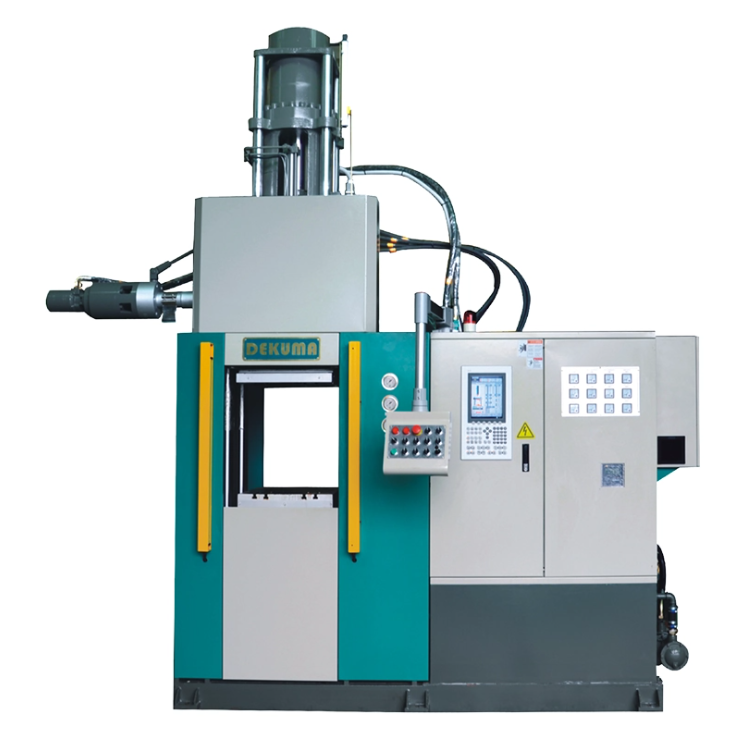
This principle can be seen in the RV-Se Series Rubber Injection Molding Machine from Dekuma. The series uses servo-hydraulic technology to control pressure and flow for TPV, TPE, flexible modified PVC, and other materials processed by injection molding. Its application focus includes demanding automotive production.
The machines are offered with clamping forces from 500 to 1,000 tons. The hydraulic system combines servo control with pressure and flow regulation to support stable molding cycles. The RV-Se Series is specified to consume approximately 40% of the electricity used by conventional proportional pressure and flow control systems, although actual savings depend on operating conditions.
This product example shows why energy-saving design should not be separated from molding performance. The aim is not simply to lower motor activity. The system must still provide the pressure and flow required at each stage while supporting stable cycles and repeatable production.
How Buyers Can Evaluate Energy Performance
Before purchasing a hydraulic press machine for rubber molding, buyers should compare energy use under representative production conditions. Rated power alone cannot show how the machine behaves during clamping, injection, holding, waiting, and pressure transitions.
Useful questions include whether the servo system changes output according to demand, how quickly pressure responds, and whether energy data can be monitored during production. Buyers should also compare machine performance using similar moulds, materials, cycle settings, and production targets.
Buyers should evaluate energy control alongside hydraulic stability and repeatability under representative production conditions. For B2B users, however, the practical decision should still be based on process requirements. Material type, part size, clamping demand, cycle frequency, and production volume should guide equipment selection.
Energy Efficiency as a Practical Production Metric
Energy efficiency is becoming part of equipment evaluation because it connects directly with operating conditions. With a servo hydraulic injection molding machine, manufacturers can reduce unnecessary hydraulic output when its control system closely follows real pressure and flow demand. The value is stronger when that reduction is achieved without sacrificing response or repeatability.
The same principle applies when evaluating a hydraulic press machine for rubber molding for long production runs. Buyers should examine energy use together with process stability, cycle behavior, material requirements, and clamping capacity. This approach turns energy efficiency from a marketing claim into a measurable part of production planning.